
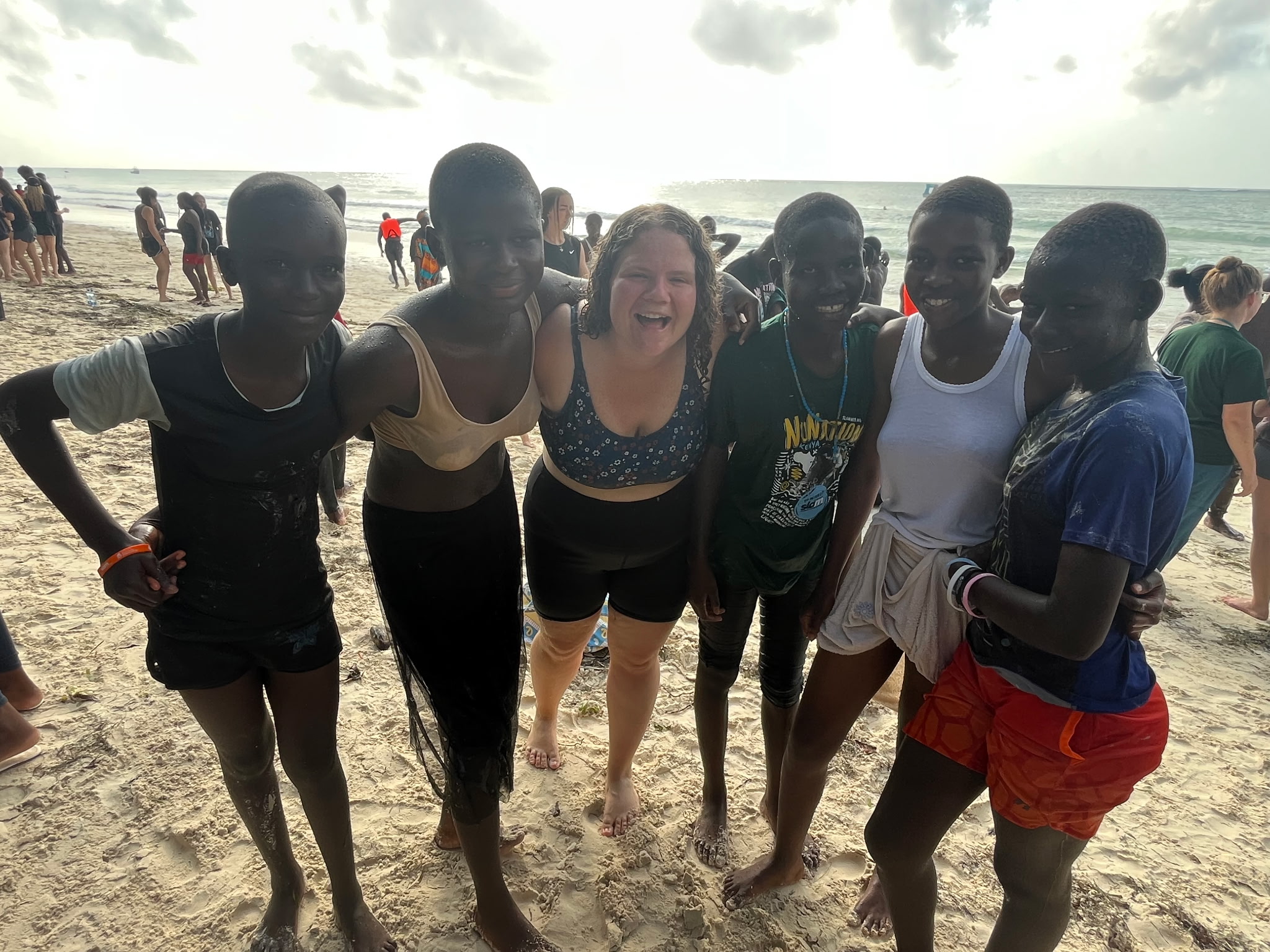
Our first night in Mombasa, as we were eating dinner I got to talk with a young woman about some cultural differences between those in her community and mine. The purpose of the conversation was to get students considering the contrast between their lived experience and what the Bible teaches about how life should work when God is King.
We narrowed the question to speak about how our cultures view women. I shared with her that in American life the ideal woman depends on no one, is strong and capable. On the other hand, she was quick to describe women as wives before anything else. They exist as subservient to their husbands.
I hope the shock didn’t read on my face, but I was floored. Never had I actually sat with someone who genuinely felt that it was right to be subservient to men. As I asked clarifying questions and got more details it became clear that she felt a woman’s place is under the power of a man.
Yet, God’s word best explains why both of our cultures find a better alternative in God’s Kingdom.
This mindset is the first of several reasons why women don’t often have a successful educational experience in the third world, they aren’t expected to think for themselves.
Myself and some other interns shared the responsibility of leading a small group after the messages. We had 12 young women. In the last 15 years I’ve led hundreds, maybe thousands of small groups. Never have I had middle school girls be so totally silent. Not off topic. Not distracted. Silent. One vibrant young women named Dion was loud when playing with her friends so I had to ask myself why she couldn’t talk in small group.
It reminded me of another experience i had while teaching at one of the schools. I asked students to use their creativity to answer a question. I had to explain it several times before they understood what I was asking. Don’t use your surroundings. Don’t base it on how I’m phrasing the question. Use your mind. It was a foreign concept.
Rote memorization is the means of learning for these children and it shows most prominently when you ask for their creativity. It is a challenge for them to think for themselves.
Obviously overflowing classrooms and undereducated teachers contribute to these issues, but I began to wonder about other things as well. Professor Garner asked us to consider the scope of a child’s responsibilities: Carrying water from the well for miles, cooking for the family or hand washing clothes. Doing all of those jobs while also in a calorie deficit is not a recipe for your mind to work properly.
Another consideration that Professor Garner asked us to make was regarding beatings, not the kind you are thinking of. Students are beat on the head by administrators at the school as a form of punishment. We know that brain trauma costs a person brain capacity every time it happens and that it can even compound if the injuries are close enough together.
All of these circumstances come against young women as they work to become educated. It showed me that though we often think of Americans as exceptional or even superior to the rest of the world, it is our opportunities that make us so. I now have a conviction for understanding why we received the results that we did instead of judging others for their complex problems.
In the case of lack of education for women in the third world, the answers for why are varied and vast. As God’s people, we have to care though because we want all children of God to be able to know the truth of God’s word for themselves. It requires that these girls learn how to think and speak.
When I first put all of this together I was overcome with anger. Who would do this to children? As I was processing this with a friend she pointed out to me the way that we train our brains is with practice. We make them work. The time I put in with those 12 girls pushing them to think and then put words together is exactly the work that slowly changes this paradigm. One child at a time.
Our final night together was not perfect. It had many long stretches of silence and repeated questions, but they came with notes. They had prepared thoughts to start the conversation off with. I could tell it took courage and work, but they put in the effort to improve.
I like things to move quickly. Come on everyone work harder, make it happen fast, do it better. The pace God sets is much slower. He works over the course of generations to bring redemption to families and whole communities. There is nothing I can do to effect this kind of holistic change alone, but it will take time and the whole Kingdom of God working together. Today I’m feeling hopeful and angry and sad. I’m learning to hold it all.